Sleep deprivation is currently considered as a serious health epidemic which threatens the health of millions. This infograph aims to spread awareness regarding sleep deprivations and some common sleep disorders. Alarming statistics regarding these health risks are also provided.
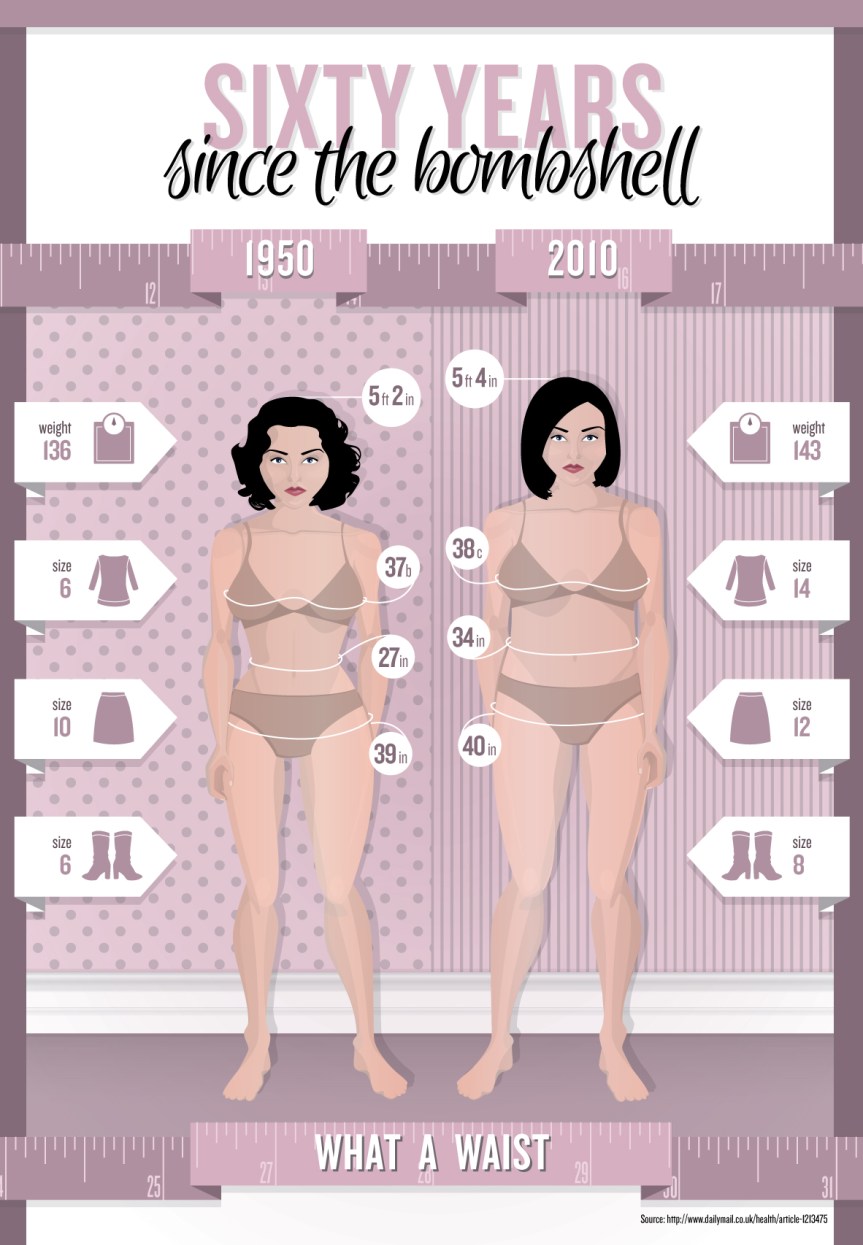
It’s been over sixty years since the 1950’s bombshell, and while women on average have only gained 7 lbs and grown 2 inches, one cup size, 2 shoe sizes, and an inch around the hips, women’s waists have grown 7 inches!
On the average, people in the US are exposed to about 3 millisievert (mSv) of radiation a year a millisievert is just one type of measurement unit for radiation dose, also called the effective dose which would refer to the average radiation risk of the entire body. However, more and more people are getting medical procedures involving radiation, increasing an individuals radiation exposure. In 2006, about 435 million procedures used radiation for either diagnostic or therapeutic purposes.
When it comes to medical radiation, different areas and organs of the body have different sensitivities to radiation exposure. Furthermore, the risk involved varies depending on the procedure type, the number of procedures, the area to be imaged, and the patient, specifically their medical history, age, and sex.
In general, radiation becomes potentially dangerous to people when it reaches high levels. In light of growing concerns, experts have been able to relate the radiation from medical imaging procedures to ones exposure to natural background radiation. For a better understanding of the diagnostic imaging procedures and your risk of radiation, check out this infographic by Radcal Corporation.



 Advance Health & Fitness
