Aortic aneurysms are the most common type of this artery defect. They can happen at any point along the aorta and may cause chest pain, nausea, or sweating. Learn about other types of aneurysms by clicking over to this infographic from an emergency room in Plantation.
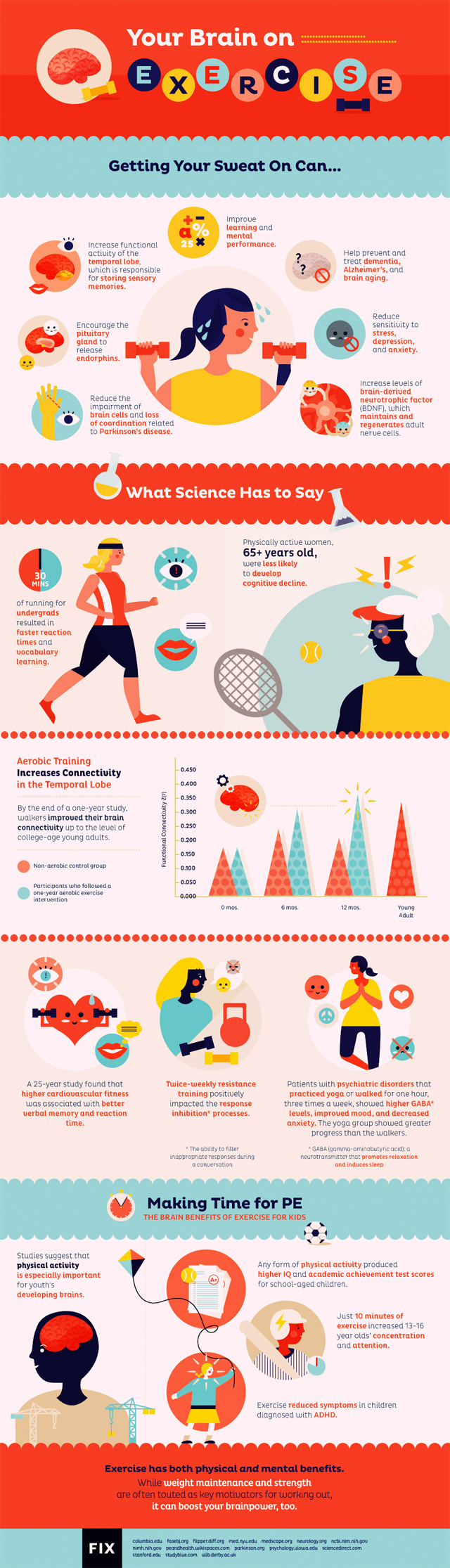
Everyone knows that exercise is good for your body. But did you know that exercise can hold one of the keys to a happier, healthier brain? http://www.fix.com has created an infographic entitled Your Brain on Exercise, that lists some of the far-reaching benefits that regular exercise can hold for your grey matter.
When you exercise, your body gets healthy in more ways than one. While you may be running miles to fit into that little black dress, your exercise can also help improve your learning and mental performance, help prevent (and treat) dementia, Alzheimers, and brain aging, reduce stress and anxiety, and even help your brain maintain and regenerate cells.
Exercise is beneficial for every age. Undergrads discovered faster reaction times and a host of new vocabulary words by running just 30 minutes a day. For physically active women 65 and up, exercise showed a reduction in the chances of developing cognitive disease. Aerobic training on its own has been proven to foster brain connectivity.
This infographic shows a host of other benefits that exercise can offer whether youre young or old.
Pass on the knowledge by liking, commenting, or sharing this infographic from http://www.fix.com entitled Your Brain on Exercise.
What makes humans, human? Lets put aside all philosophical and moral debate, and focus on our genetic structure. Humans are human based on our hereditary information, or in other words, our genome. The human genome is a blueprint of our body, basically a storage unit of all our genetic information into a DNA sequence. Historically, weve come a long way in understanding our genetic structure; how our information is stored and what makes up our information. From 17th century scientists and biologists, to modern day medicine this infographic takes us on an outline though the history of genetics.
Today, we know that a genome is essentially our DNA, a bundle of genetic information containing our normal 23 chromosome pairs. Our founding fathers, however, had a few other theories concerning our genetic makeup. After the development of microscopes in the 17th century, scientists postulated that miniature replicas of human beings were located inside sperm heads. However, they were sort of on the right track, French biologist Jean-Baptiste Lamarck raised the idea of an inheritance of acquired characteristics which determined what made individual humans, well, individuals. Not long after, Darwin as well as Gregor Mendel both began formulating their ideas on inheritance and genetics.
Its safe to say that the mid-20th century marked the basic building blocks of what we understand of genomes, known as genomics the study of DNA structure and function. Using various components from molecular biology to biochemistry, while incorporating advanced technology, computer science, and mathematics, we are able to comprehend what makes up our structure and come up with new disease diagnoses and treatments.
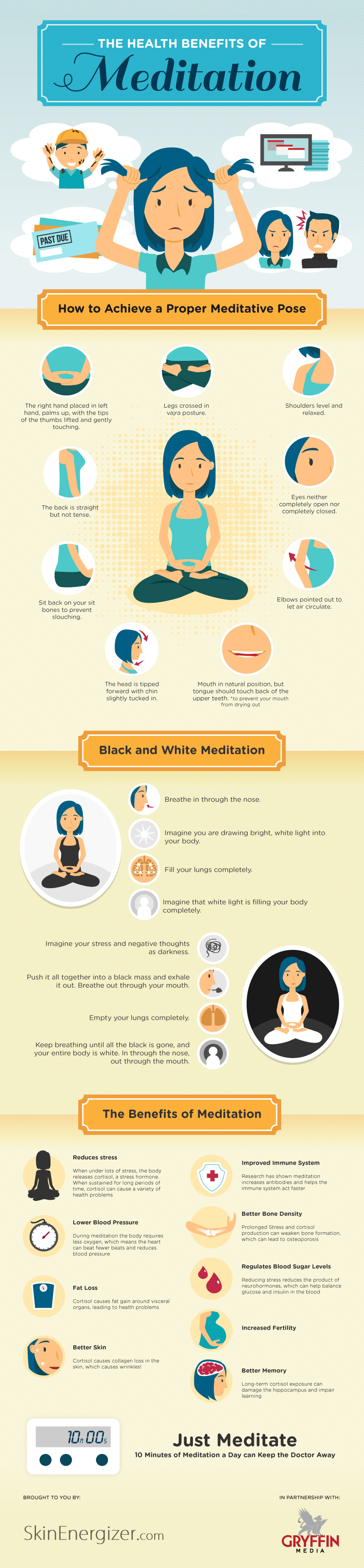
Grab your yoga mat and plastic water bottle and take a seat! Use these meditative poses to relieve stress, pains, or just simply relax with a clear head.


 Advance Health & Fitness