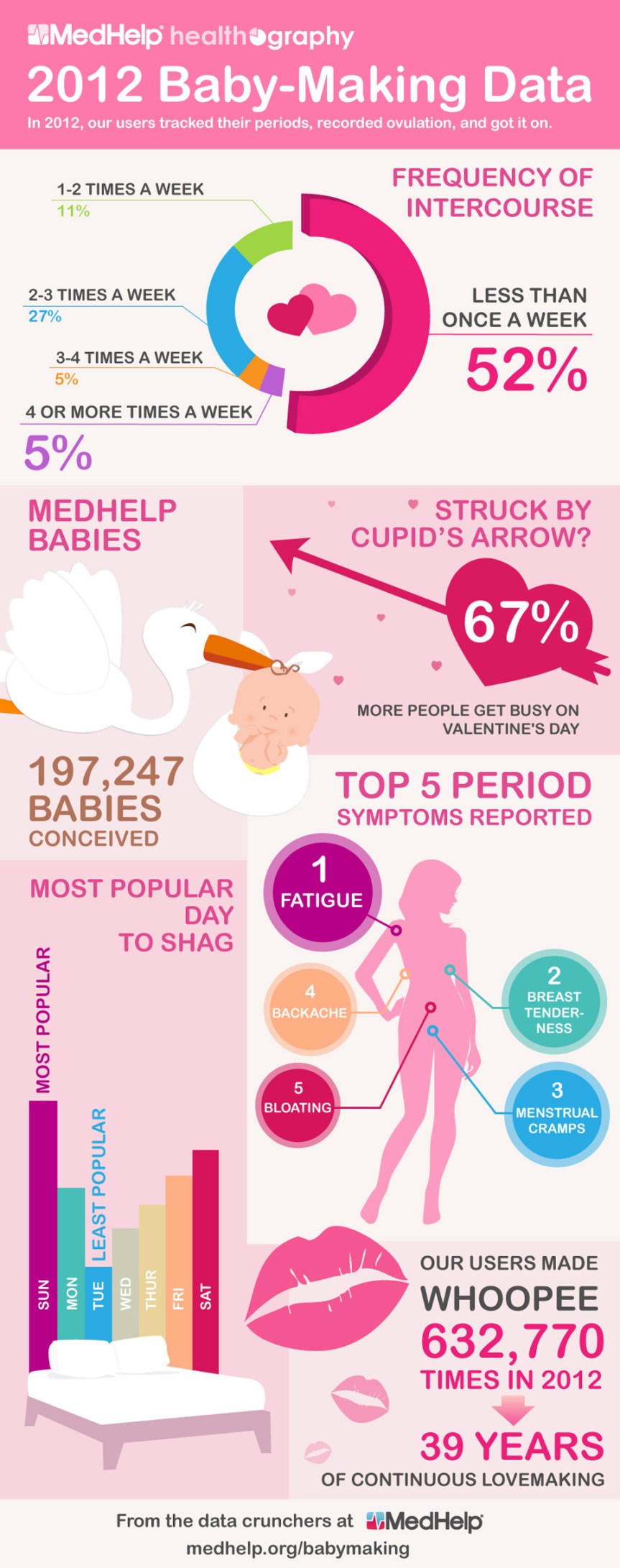
In 2012, MedHelp users shagged over 600,000 times and conceived nearly 200,000 babies and that bedroom heat was especially hot on Sundays. (So much for a day of rest!)
MedHelp, the world’s largest online health community and the world’s largest
database of self-reported medical data, has drawn from our more than 100 million self-reported data points to bring you some interesting and useful insights around sex, conception and more.
Although Zika has long been aware of in the world history, it is not until recently that people have come to realize it is enormous and dangerous. With WHO claiming Zika a public health emergency of international concern, it is vital that everybody should take steps to prevent and tackle the disease, especially pregnant women and their family.
Finding out youre pregnant is a wondrous and exciting occasion, marked with physical as well as mental and emotional changes. Although these changes will prove to be taxing on you and your body, the end result will be a beautiful baby boy or girl youll be welcoming into the world.
From the moment your baby is a single cell, the physical changes that take part throughout your body are astounding. Your bones soften, hair thickens, and even your heart grows, enlarging due to the extra work load, all due to hormone increases and fluctuations! These are just a few of the amazing changes covered in this infographic. Youll gain remarkable insight into some interesting facts and statistics of fertility, pregnancy, and birthing.
Everyone knows that as you get older, your fertility begins to decline, but did you actually know that older women are also much more likely to give birth to twins and triplets? In 2010, there were about 571 babies born to women over the age of 50! Once youve gotten pregnant, you can expect to see some big changes coming, for one, gaining on average of about 21-30 pounds. But theres no need to fret, about 38% of that is the weight of the baby; the rest consists of the placenta, fluid and blood, and fat mostly gained around the breasts and uterus (which will be expanding up to five times its normal size!). Once those 9 months pass, it will be time for you to decide how your baby will be delivered. Although most cesarean deliveries are required, many women still might prefer to go this route as opposed to a vaginal delivery. The real fun comes when your baby finally arrives! Most likely averaging in at about 7 pounds, the last thing there is to do is decide on your babys name. http://cordadvantage.com/cord-blood-blogs/2013/08/09/how-you-are-saving-gas-and-the-environment/
This infographic was created specifically for pregnant women, who are more often than not, have difficulty in sleeping. First, the infographic acknowledges the importance of sleep during pregnancy. During each trimester of pregnancy, there are different symptoms that can disturb a woman’s sleep. The infographic also noted some tips that can help an expecting woman to experience better sleep.


 Advance Health & Fitness